

A coalition of civil rights organizations filed a lawsuit on Monday challenging the Trump administration’s decision to pause the processing of immigrant visas for citizens from 75 countries, arguing that the policy upends long-standing U.S. immigration law.
The lawsuit, filed in federal court in Manhattan, asks a judge to block the policy, which took effect on January 21. According to the complaint, the pause “eviscerates decades of settled immigration law” and is based on what the plaintiffs describe as false and unsupported assumptions about immigrants’ reliance on public assistance.
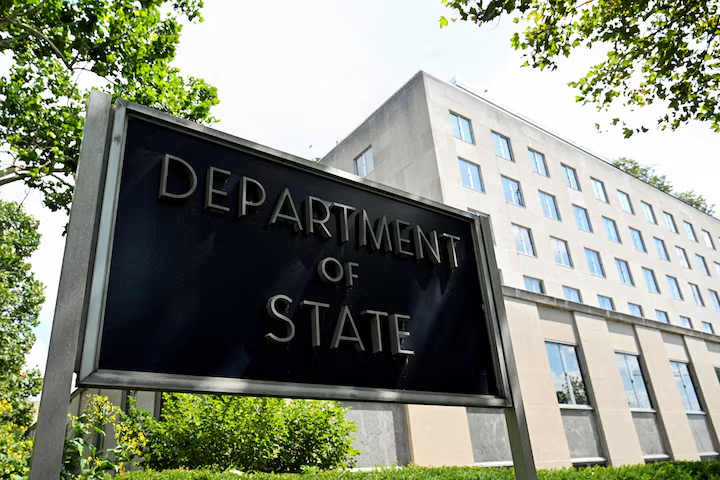
The groups argue that the U.S. State Department’s justification—that nationals from the affected countries are more likely to become “public charges”—lacks factual basis. They say the policy wrongly paints entire populations as economic burdens and violates statutory protections embedded in U.S. immigration law.
The State Department did not immediately respond to a request for comment.
The case was brought by the National Immigration Law Center and other advocacy groups on behalf of a broad group of plaintiffs. Among them are U.S. citizens who say they have been separated from spouses, children or other close relatives because visa processing has been frozen. Another plaintiff is an endocrinologist from Colombia who had been approved for an employment-based immigrant visa but cannot receive it because Colombia is included on the list of affected countries.
The pause applies to a wide geographic range. It affects applicants from Latin America, including Brazil, Colombia and Uruguay, as well as countries in the Balkans such as Bosnia and Albania. It also covers nations in South Asia, including Pakistan and Bangladesh, alongside dozens of countries across Africa, the Middle East and the Caribbean.
Notably, the policy does not apply to non-immigrant visitor visas. Those visas have drawn heightened attention as the United States prepares to host major global events, including the 2026 World Cup and the 2028 Olympic Games.
A State Department cable outlining the decision, reviewed by Reuters, said the agency is conducting a “full review” of visa-related policies, regulations and guidance to ensure what it described as the highest level of screening and vetting. The cable stated that applicants from the 75 countries covered by the pause are considered at high risk of becoming public charges and relying on local, state or federal government resources.
The lawsuit adds to a growing wave of legal challenges confronting the Trump administration over immigration policy, particularly measures that critics say rely on broad generalizations rather than individualized assessments.