

The United States has taken the rare step of threatening to bar Swiss private lender MBaer Merchant Bank AG from access to the U.S. financial system, accusing it of facilitating transactions tied to sanctioned actors in Iran, Russia and Venezuela.
In a notice issued on Thursday, the U.S. Treasury alleged that MBaer and certain employees helped move funds connected to Iran’s Islamic Revolutionary Guard Corps and its Quds Force, both subject to U.S. sanctions. The Treasury also cited alleged links to corruption and money laundering involving Venezuelan and Russian interests.
The action, initiated through the Treasury’s Financial Crimes Enforcement Network (FinCEN), proposes a rule that would prohibit U.S. financial institutions from opening or maintaining correspondent accounts for MBaer. If finalized, the measure would effectively sever the bank’s access to the dollar-based financial system — one of Washington’s most powerful enforcement tools.
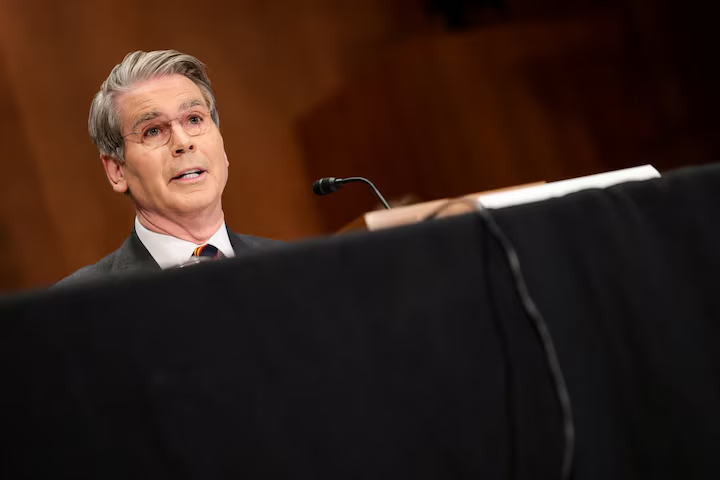
U.S. Treasury Secretary Scott Bessent said the bank had channeled more than $100 million through the U.S. financial system on behalf of what he described as illicit actors tied to Iran and Russia. “Banks should be on notice that the U.S. Treasury will aggressively protect the integrity of the U.S. financial system,” he said.
FinCEN’s proposed rulemaking opens a 30-day public comment period before any final decision is taken.
MBaer said it would respond after consulting with its U.S. legal advisers. The bank added that it continues to operate with what it described as a solid capital and liquidity position and is cooperating with Swiss authorities.
Switzerland’s financial regulator, FINMA, said it had concluded its own enforcement proceedings against MBaer three weeks earlier. However, due to a legal appeal by the bank, it was unable to implement certain measures and has instead appointed an independent audit agent to monitor the institution.
According to FinCEN, MBaer allegedly used shell companies to obscure the identities behind transactions, including movements of funds linked to Venezuelan state oil company PDVSA beginning in 2020. U.S. authorities claim some of those transactions related to oil sales conducted in violation of sanctions.
The notice also pointed to what FinCEN described as a significant presence of Russian clients at the bank, including individuals subject to sanctions. It alleged involvement in transactions connected to Russian and Ukrainian political figures and businesspeople with ties to the Kremlin.
Legal experts say the move sends a broader signal beyond the relatively small Swiss bank. Professor Michael Levi of Cardiff University described the announcement as a strategic warning to financial institutions globally not to assist sanctioned actors.
If implemented, the measure would mark one of the most consequential U.S. enforcement actions against a Swiss bank in recent years. The last European bank to face a comparable restriction was Latvia’s ABLV, which shut down in 2018 following U.S. allegations of money laundering and sanctions violations.
MBaer was founded in 2018 by Michael Baer, a former executive at Julius Baer. According to Swiss media reports, the bank had approximately 3.5 billion Swiss francs in assets under management as of late 2023.
The case unfolds amid ongoing diplomatic and economic discussions between Washington and Bern, underscoring the far-reaching impact of U.S. sanctions enforcement in global finance.