

A key party within Malaysia’s governing coalition is reassessing its political position as internal tensions escalate over a corruption controversy involving the country’s anti-graft agency.
A senior figure from the Democratic Action Party said the party will evaluate its role in the ruling alliance led by Prime Minister Anwar Ibrahim ahead of the next national election, as frustration grows over the government’s response to misconduct allegations at the Malaysian Anti-Corruption Commission.
Malaysia has spent years attempting to restore public confidence following the multibillion-dollar scandal surrounding the state investment fund 1MDB, which shook the country’s political system and resulted in the conviction of a former prime minister.
Although the current controversy is far smaller in financial scale, accusations involving the Malaysian Anti-Corruption Commission have revived public scrutiny over governance reforms promised by Anwar’s administration.
Tony Pua, the disciplinary chief of the Democratic Action Party, said the party would reconsider its strategy within existing political coalitions once the country approaches the next election cycle. However, he emphasized that the party has no plans to withdraw support from the government during the current parliamentary term, citing concerns about triggering political instability.
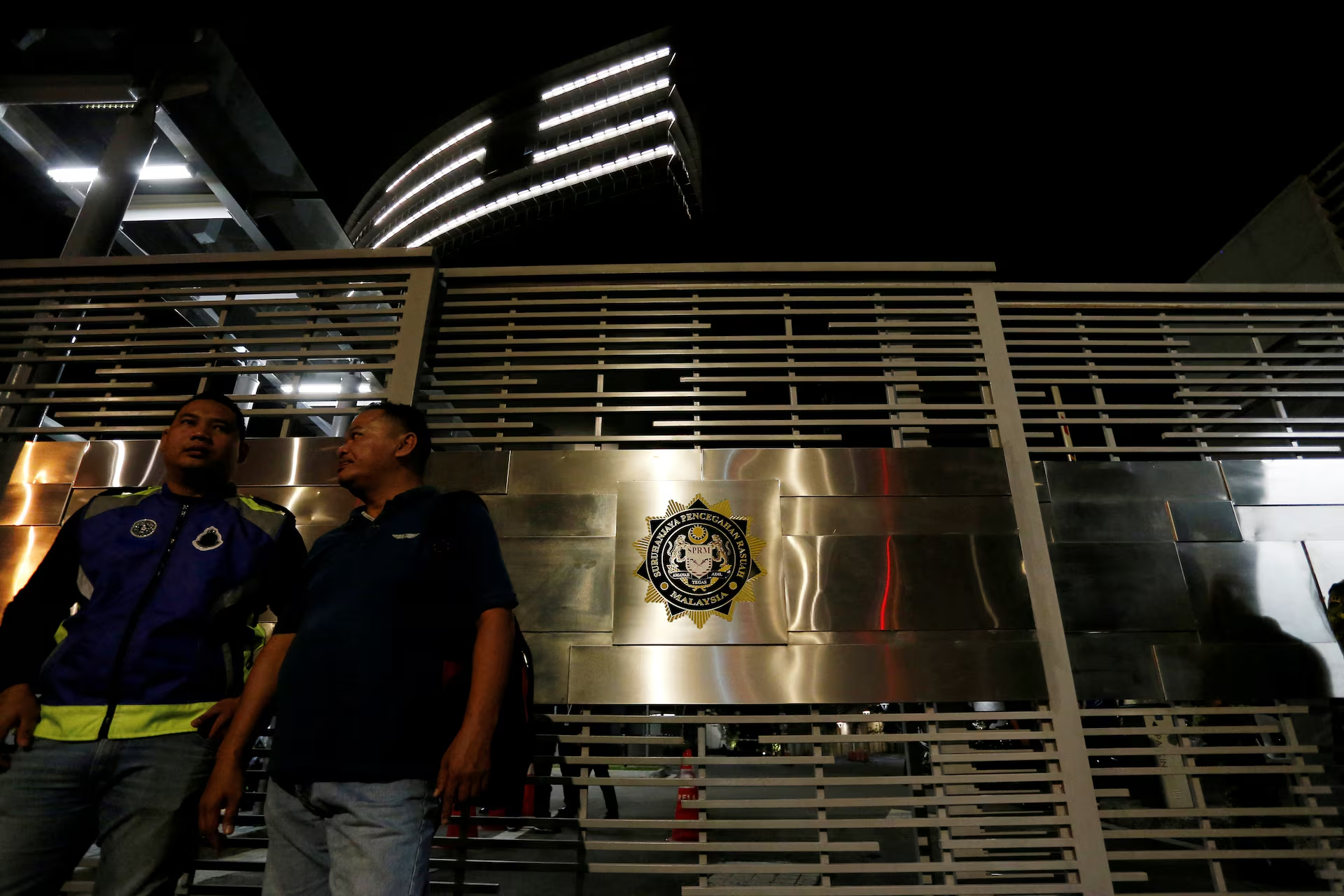
The controversy centers on allegations involving MACC chief Azam Baki. Reports last month suggested he may have breached rules governing shareholdings held by public officials and that the agency may have assisted a group of businessmen attempting to gain control of companies. Both Azam and the anti-corruption agency have denied any wrongdoing.
The Malaysian government has established a committee to review the claims, with findings expected soon. Nevertheless, critics say the response has fallen short of the broader investigation demanded by some lawmakers and civil society groups.
Calls have intensified for the creation of a royal commission of inquiry to examine the allegations more thoroughly. So far, the prime minister has declined to endorse such a step, a decision that analysts warn could deepen political divisions within the coalition.
Political risk analysts say the dispute could become a major issue ahead of the next election if the controversy remains unresolved. Malaysia’s national vote must be held by early 2028, although speculation has emerged that the prime minister could call a snap election as early as July.
Signs of internal strain have also appeared within Anwar’s own party, the People’s Justice Party. Some lawmakers have reportedly discussed the possibility of contesting future elections as independents due to dissatisfaction with the government’s leadership and reform pace.
Several political figures argue that the episode highlights the need for deeper structural reforms to address longstanding corruption risks within Malaysian institutions.