

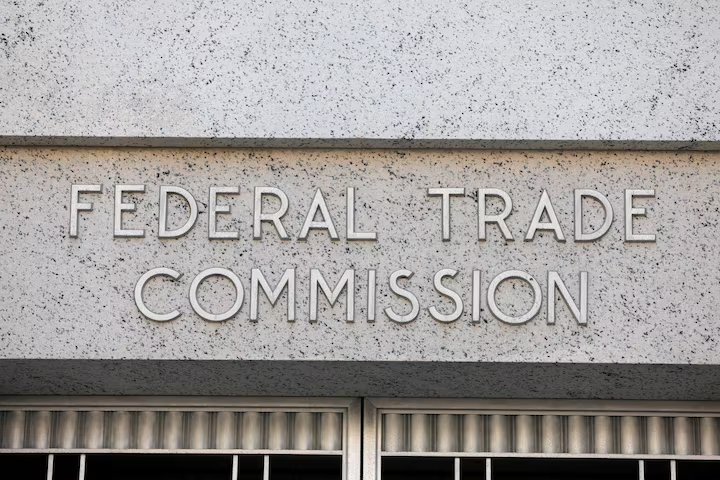
U.S. regulators are intensifying scrutiny of the rental housing industry, marking a notable shift in how consumer protection laws may apply beyond traditional financial services. In recent months, the Federal Trade Commission has taken a more aggressive posture toward pricing practices it views as deceptive, raising compliance risks not only for landlords and software providers, but potentially for other sectors that rely on complex fee structures.
The latest actions come amid rising political pressure over housing affordability. Against that backdrop, the FTC announced plans to pursue rulemaking aimed at unfair or deceptive fees in rental housing.
Soon after, the agency’s Bureau of Consumer Protection sent warning letters to 13 property management software companies. The letters outlined practices that regulators say could violate federal law if renters do not receive clear, upfront disclosure of mandatory fees before providing payment or financial information.
At the center of the move is the FTC’s evolving interpretation of the Gramm-Leach-Bliley Act. While the statute primarily governs financial institutions, one provision bars any party from using false or misleading statements to obtain consumer financial information.
Historically, regulators applied that rule to classic pretexting schemes, such as impersonating banks to access accounts. Now, the FTC is applying it more broadly to deceptive pricing practices, even when companies ultimately deliver the goods or services advertised.
Rulemaking and warning letters reshape compliance risk
The agency’s direction became clearer following a $24 million settlement with a major U.S. rental operator. In that case, the FTC alleged the company advertised base rents without disclosing mandatory fees until later in the process. Regulators argued that this omission misled consumers at a critical point, when they were asked to share payment details or place deposits. The settlement requires clearer disclosure of total prices before any money changes hands.
FTC Chairman Andrew Ferguson framed the initiative as a response to what he described as heightened consumer vulnerability during a cost-of-living crisis.
At the same time, the move represents a departure from his earlier skepticism toward rulemaking. Rather than relying solely on case-by-case enforcement, the agency is now signaling interest in broader regulations to address what it sees as persistent market failures.
Legal analysts note that the warning letters serve two purposes. First, they put the rental housing industry on notice that pricing opacity is now a top enforcement priority. Second, they preview how the FTC might use existing statutes in new ways. By invoking the Gramm-Leach-Bliley Act outside the financial sector, the agency suggests that deceptive conduct tied to payments and data collection may trigger heightened scrutiny across industries.
Importantly, the FTC has not accused companies of criminal fraud or money laundering. The actions remain civil and regulatory in nature. Still, they reflect a widening enforcement lens that blurs traditional boundaries between consumer protection and financial oversight.
For companies well beyond housing, the message is becoming harder to ignore. Practices once viewed as aggressive marketing may now draw regulatory attention if they obscure true costs at the moment consumers are asked to pay.