

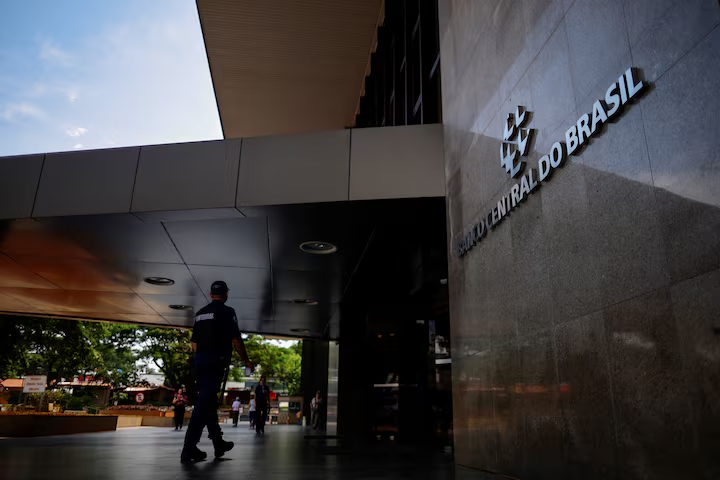
Brazil’s central bank has ordered the liquidation of brokerage firm REAG, now operating under the name CBSF, citing serious violations of financial system rules. The decision marks a new chapter in the fallout from the collapse of Banco Master, a mid-sized lender that entered liquidation late last year after regulators uncovered deep irregularities.
The order, signed by central bank governor Gabriel Galipolo, states that the measure followed findings of severe non-compliance with regulations governing institutions within Brazil’s national financial system. While the central bank did not detail every infraction, it made clear that the violations were significant enough to warrant the firm’s shutdown rather than corrective supervision.
The move comes as federal police widen their investigation into alleged fraud linked to Banco Master’s collapse. Authorities this week added REAG founder João Carlos Mansur to a list of investigation targets. According to investigators, REAG played a role in suspicious fund transfers identified during the review of Banco Master’s operations, raising concerns about internal controls and transaction oversight.
Fraud and money laundering probes deepen scrutiny
REAG’s troubles extend beyond the Banco Master case. Last year, the brokerage was also the subject of search warrants in a separate federal police operation targeting large-scale money laundering and fraud schemes tied to organized crime in Brazil’s fuel distribution sector. That investigation focused on complex financial structures allegedly used to move and conceal illicit funds across multiple entities.
Regulators have emphasized that the liquidation poses no systemic risk. The central bank said REAG and CBSF together account for less than 0.001% of the total adjusted assets of Brazil’s financial system. Still, the decision sends a strong signal about enforcement priorities, especially as authorities tighten scrutiny of brokers and intermediaries connected to high-profile banking failures.
For Brazil’s financial watchdogs, the REAG case illustrates a broader effort to restore confidence after a series of scandals involving fraud, weak governance, and suspected money laundering.
By opting for liquidation, rather than fines or management changes, the central bank appears determined to demonstrate that repeated or serious breaches will carry the ultimate penalty, even for firms with a relatively small footprint in the broader market.