

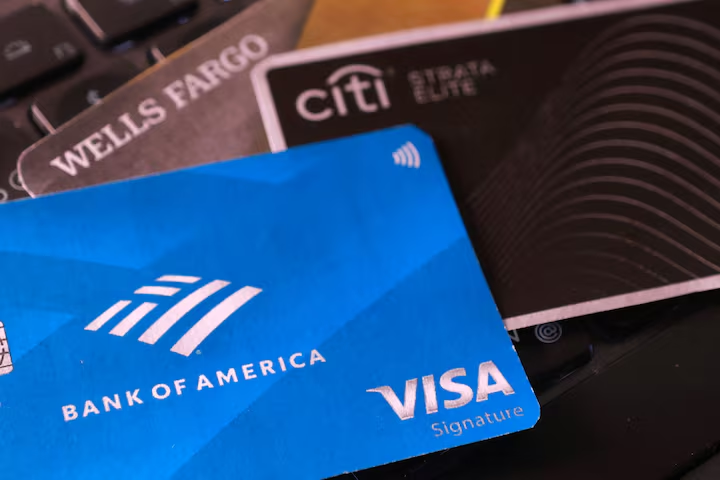
U.S. banks are confronting a new political and commercial dilemma after President Donald Trump called for a temporary cap on credit card interest rates, a move that has unsettled markets and left lenders uncertain about how, or whether, they are expected to comply. With no clear legal mechanism in place, the proposal has forced the financial industry into a period of quiet negotiation and strategic calculation.
Trump said earlier this month that he wanted credit card interest rates capped at 10% for one year starting January 20. The announcement immediately pressured bank shares and triggered warnings from lenders that such a cap could restrict access to credit, especially for higher-risk borrowers. Since then, the White House has offered few details on enforcement, leaving banks without formal guidance as the proposed start date approaches.
Regulatory experts note that a mandatory cap would almost certainly require congressional action. Past efforts to legislate similar limits have repeatedly failed. While the administration has not ruled out executive action, analysts question whether such a step would survive legal scrutiny.
Industry seeks clarity as pressure builds
Behind the scenes, banks have opened discussions with administration officials in an effort to understand the president’s expectations. Several industry sources said lenders are taking the proposal seriously, even though no law or regulation currently requires them to change pricing. Some executives have prepared for direct outreach from the White House, reflecting concern about political fallout if they appear uncooperative.
White House economic adviser Kevin Hassett has floated the idea of voluntary compliance, suggesting banks could introduce special low-interest products rather than face formal regulation. He even raised the possibility of so-called “Trump cards,” which lenders could offer at reduced rates. A White House spokesperson later said the president views compliance as an expectation, even if no specific penalties have been outlined.
The uncertainty has left banks in a tight spot. On one hand, the industry has long opposed rate caps and is expected to intensify lobbying efforts against any legislation. On the other, open resistance could invite political backlash at a time when consumer costs remain a sensitive issue ahead of congressional elections.
Analysts say compromise may prove the most likely path. Some banks could roll out no-frills cards with lower rates and fewer rewards, or limit such products to certain customer segments. Similar offerings already exist at institutions like Bank of America, suggesting lenders could adapt without overhauling their entire credit card businesses.
Credit cards remain a major profit center for large banks, so any sustained cap would weigh on earnings expectations. Even so, market participants caution that prolonged uncertainty may pose the greater risk. As one portfolio manager put it, policy volatility often translates into market volatility, and investors are unlikely to relax until the administration signals a clearer path forward.
For now, banks are watching closely, balancing political pressure against legal realities, while preparing for multiple scenarios if Trump’s proposal gains momentum.