

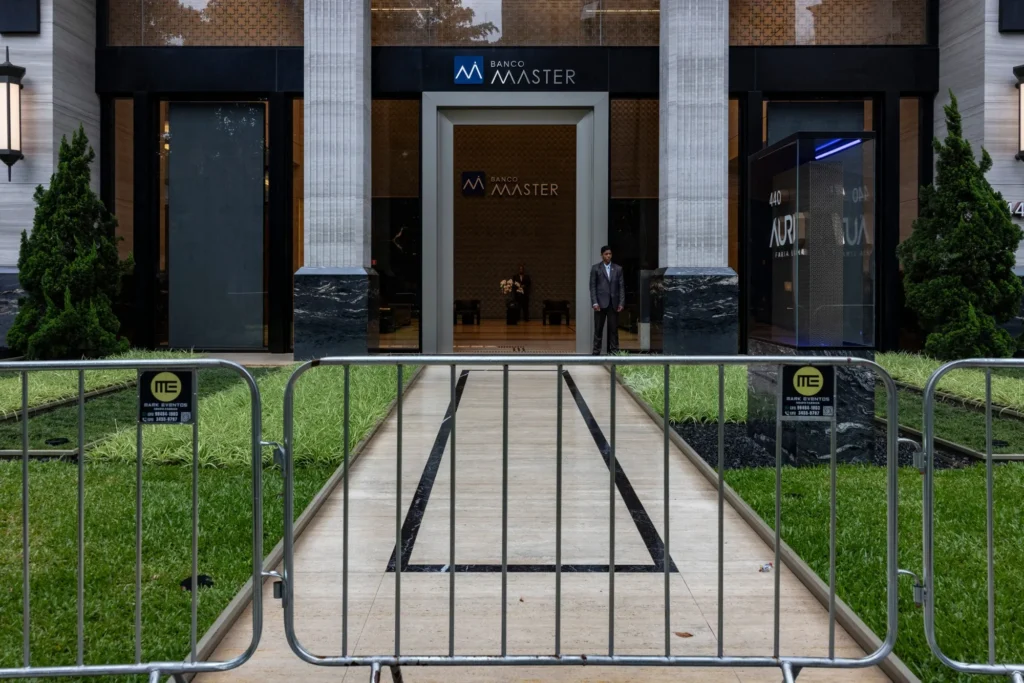
Brazil’s federal prosecutors expect to spend at least four to six months reviewing evidence gathered in the expanding investigation into the collapse of Banco Master, according to a source with direct knowledge of the case. The timeline suggests that criminal decisions tied to one of Brazil’s most closely watched banking failures will not come quickly.
The source, speaking on condition of anonymity because the inquiry remains confidential, said prosecutors are now analyzing a vast trove of material collected during recent police operations. Authorities have obtained court-approved access to bank and tax records linked to 101 individuals and companies. In addition, investigators seized documents and digital evidence during raids at 42 locations, following warrants authorized by Brazil’s Supreme Court.
Given the scale of the material, prosecutors do not expect to reach conclusions during the first half of the year. Only after completing the review will they decide whether to file criminal charges. Potential defendants include Daniel Vorcaro, the bank’s controlling shareholder. His legal team said they were informed of the search-and-seizure actions and stressed that Vorcaro has cooperated fully with authorities. They also denied any fraud allegations against him.
Asset freezes and money laundering allegations widen the case
The latest evidence stems from the second phase of a high-profile federal police operation carried out this week. Courts ordered the freezing of 5.7 billion reais, about $1.06 billion, in assets belonging to suspects under investigation. Authorities are examining alleged crimes that include racketeering, fraudulent management of a financial institution, market manipulation, and money laundering.
The first phase of the probe began in November, when police focused on claims that Banco Master relied on fraudulent credits to fuel its growth. On the same day, Brazil’s central bank placed the lender into liquidation, citing serious irregularities.
Although Banco Master represented less than 1% of Brazil’s total banking assets, its failure has drawn intense scrutiny. The bank aggressively marketed high-yield debt products that investors believed were protected by Brazil’s private deposit guarantee fund. With the lender now liquidated, investors are waiting for compensation tied to roughly 41 billion reais, or $7.63 billion, in assets.
For prosecutors and regulators, the case has become a test of Brazil’s ability to police complex financial schemes involving alleged fraud and money laundering. The lengthy review process underscores both the scale of the investigation and the stakes involved as authorities weigh whether to pursue criminal charges in one of the country’s most significant banking scandals in recent years.