

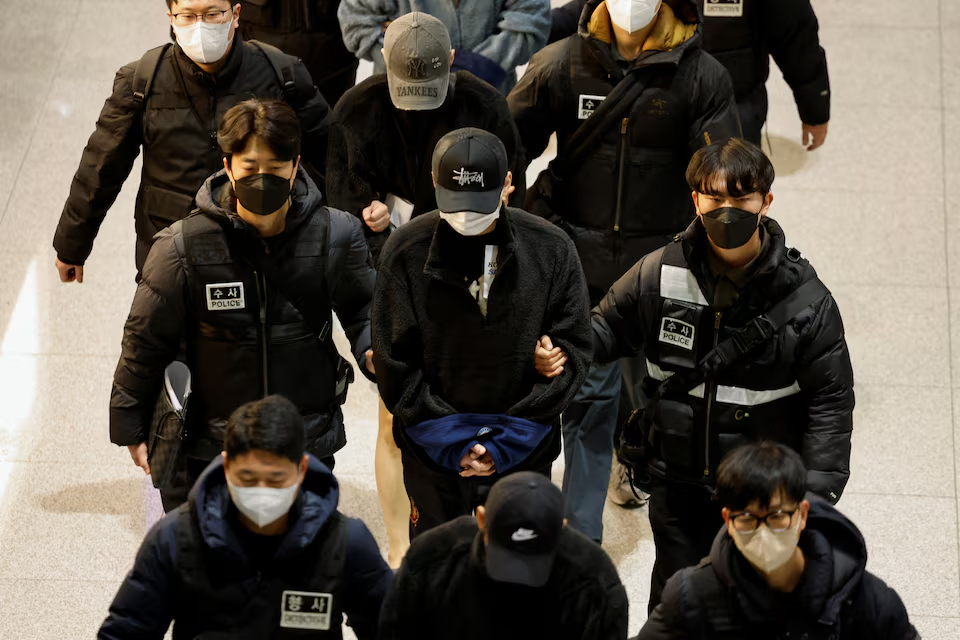
South Korean authorities have repatriated 73 people suspected of running online scam operations in Cambodia, as part of a cross-border investigation into fraud that allegedly cost hundreds of victims tens of millions of dollars. Officials said the suspects are linked to a network of scam centres that targeted South Koreans through sophisticated online schemes.
The group arrived at Incheon International Airport on Friday aboard a chartered plane, marking the largest batch of suspected scam operators returned to South Korea so far. Television footage showed police escorting the suspects from the aircraft to waiting buses, as investigators prepared to question them over allegations involving roughly $33 million in losses.
According to officials, the operation stems from a joint probe by South Korean and Cambodian authorities. Investigators believe the suspects were involved in seven scam centres that collectively defrauded 869 South Koreans through online platforms. Police said the crimes were coordinated from Cambodia but deliberately aimed at victims back home.
A senior police official warned that committing crimes abroad would not shield suspects from accountability. He said South Korea would continue to pursue transnational offences that harm its citizens and ensure those responsible face consequences under the law. A foreign ministry official added that cooperation with Cambodian authorities would continue until such scam networks are dismantled.
Deepfake scams and cross-border enforcement
Among those repatriated is a couple accused of orchestrating large-scale romance scams using deepfake technology to conceal their identities. Authorities said the pair allegedly extorted around 12 billion won from more than 100 victims. Investigators believe they even underwent plastic surgery in an attempt to evade identification, highlighting how far some suspects were willing to go to avoid detection.
Another suspect is accused of posing as a professional investor and targeting retirees and young workers, allegedly extracting nearly 19.4 billion won through false promises of high returns. Officials said these cases underscore the growing sophistication of online fraud, where scammers blend social engineering, technology, and cross-border operations to exploit victims.
The latest repatriation follows earlier crackdowns. In October, South Korea brought back 64 suspects in a separate scam case linked to the killing of a South Korean student in Cambodia, an incident that intensified public pressure to confront overseas fraud rings.
For South Korean authorities, the return of the 73 suspects sends a broader message. As online scams increasingly cross borders and adopt new technologies, enforcement efforts are expanding beyond national boundaries. Officials say the investigation is ongoing and further arrests could follow as prosecutors review evidence and determine potential charges.